Don’t be fooled by the new term ‘Value Improvement’, it is Quality Improvement by any other name


Dr. W. Edwards Deming would say by improving quality, value will be increased. This might take a ‘chain reaction’ for value to be realised by both customer and creator.
It’s not just about quality of a product or process, but what the customer values.
Novelty is Innovation?
‘Continuous Value Management’ purported to be a novel methodology is actually based on the same methodology used by many, the Model for Improvement. Tools from Lean accounting were used in a quality improvement initiative of which cost per patient was the outcome measure.
Lean Accounting took principles of Lean, applied to a specific area. Should we now start saying novel methodology is defined by applying Lean to a specific area? How about Lean Healthcare, Lean Automotive, Lean Computing, Lean Teaching.......? The principles and methodologies remain based on the same fundamentals, adapted to the context. Does that constitute a novel methodology? Does the use of established tools equate to novel methodology? I say not.
Value is simply an outcome measure. If we are going to label it as a novel methodology, then we open up anything to being novel. Value Improvement methodology is simply Quality Improvement methodology, using value-based measures, which are fundamentally what Quality should deliver to customers.
Fancy a new term? How about ‘Continuous Value Management’?!
Firstly, let’s reflect on the word ‘continuous’ that we all use indiscriminately paired to ‘improvement’.
Dr. W. Edwards Deming set the standard high with use of terminology, Operational Definitions being a key practical application to standardise understanding. Dr. Deming would espouse the use of ‘continual’ rather than ‘continuous’ when referring to improvement. Not always, but then he accepted we can always learn something new and still occasionally slip into old habits.
Can management of anything be continuous? Do managers sleep? Do automated management systems work continuously or do they occasionally need a reboot, failing to be continuous? Can any system create improvements in value continuously? Implying the value continues to increase ad infinitum, which we know is logically and practically impossible.
Fundamentally, we are faced with the dilemma that value management cannot be continuous, and managing value is nothing other than managing quality or improving processes to deliver better value.
For a brief general discussion on ‘continuous improvement’, see my article here.
What this equates to is another ‘fad’ in quality improvement circles. By all means adopt helpful tools to achieve the aim, but is there a need for another fad?
Stepping backwards in the ‘boxing’ score
Introducing ‘Continuous Value Management’ to healthcare added some tools to the QI repertoire.
Let’s take the ‘Box Score’ that appears in Value Improvement for Healthcare. We can see the ‘Box Score is nothing more than a table of data, usually a mass of tabulated data.
How does best practice guide us when dealing with visualising data? Not to leave it in a table, but visualise as charts. For QI, to present tabular data, especially that captured over time, rather than in a time series such as Statistical Process Control chart, is retrograde progress. Not only for QI, but in data visualisation.
Spaghetti tangle of Linkage Analysis
Another tool that seems to have found its way into the Value Improvers’ armourtarium is the Linkage Analysis, or chart.
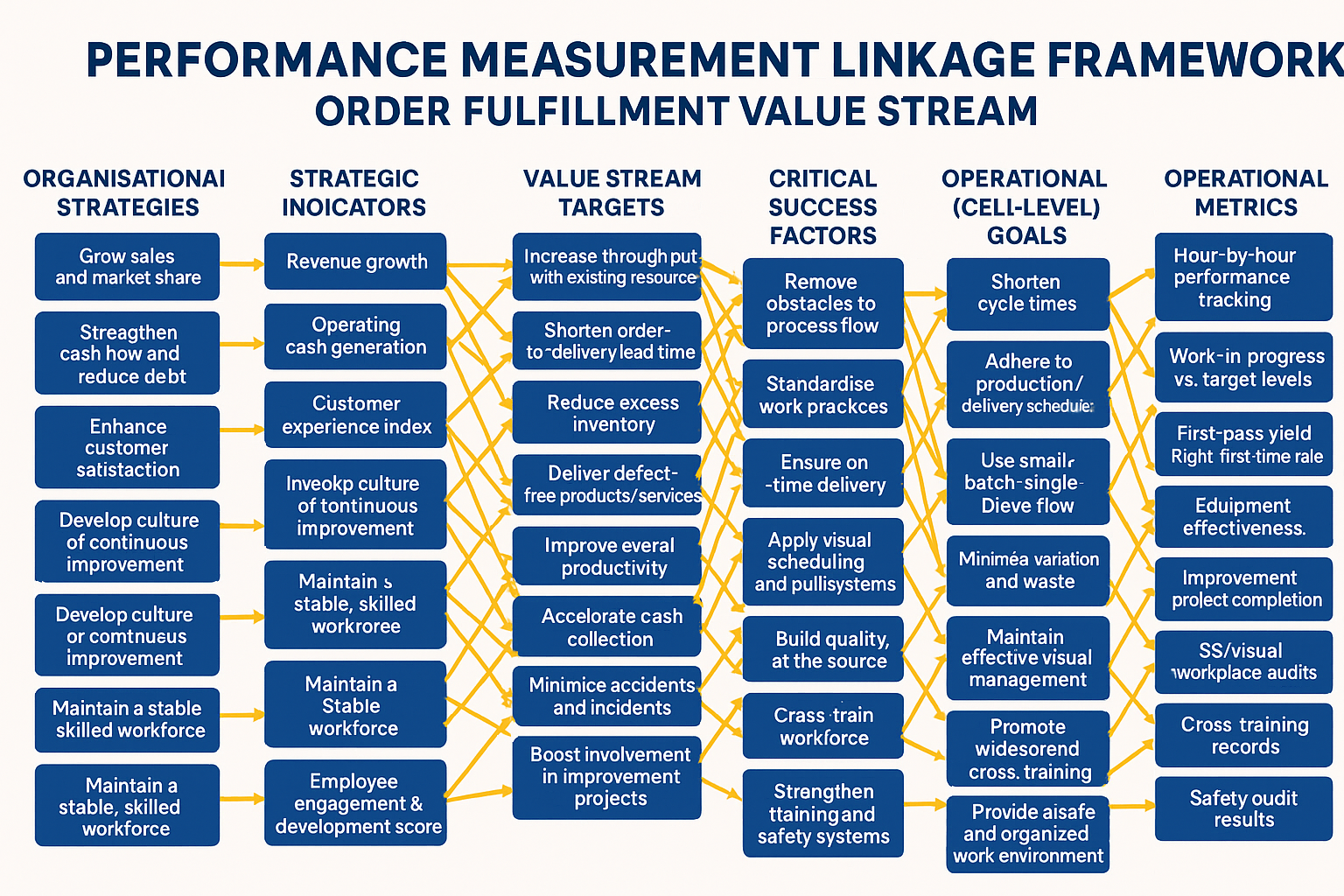
Make sense of that - nothing like making complex systems complicated!
References
Deming Institute: An ongoing conversation with Ed Baker. Episode 1 (28 January 2019).
Gupta P, Chacko G, Mavin P, et al. Value improvement at the point of care: engaging and empowering front-line teams with a new quality improvement methodology BMJ Open Quality 2021;10:e001233. doi: 10.1136/bmjoq-2020-001233
Mate KS, Rakover J, Cordiner K, et al. Novel quality improvement method
to reduce cost while improving the quality of patient care: retrospective
observational study. BMJ Qual Saf 2020;29:586–594.